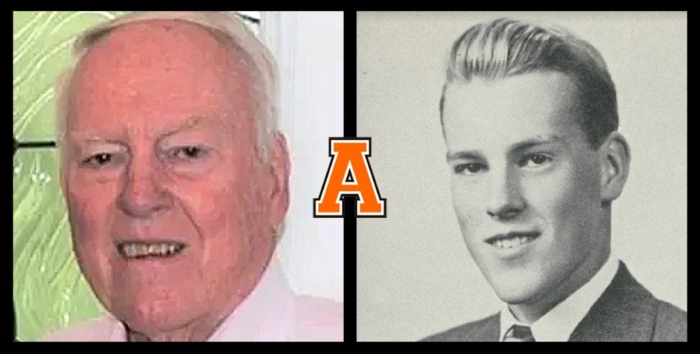
Robert “Bob” Woods, a longtime Wellesley resident. Devoted husband, father, grandfather and great grandfather, passed away on January 17th, 2023.
Bob grew up in Snyder, NY., a suburb of Buffalo. He attended Denison University and was a proud member of the Sigma Chi fraternity. In his Junior year, he met his love of 67 years, Dolores “Dede” Duffy. Bob enlisted and served on Active and Reserve Duty in the Navy for six years during the Korean War. He earned his MBA from Harvard Business School and then began his professional career, spanning over thirty years with The First National Bank of Boston. His career included senior executive roles in both the US and Europe. Bob and Dede appreciated the opportunity to travel and experience different cultures throughout the world. Bob was an invaluable guide to all who were fortunate to know him. He was an avid gardener, but he took the most care in cultivating his human relationships.
Bob’s three daughters, Suzanne Sullivan, Kim Duckett and Lisa Guarino are grateful to have had him in their lives. His grandchildren, Caroline Trussell of Wellesley, Robert Sullivan of Gettysburg, PA., Allison Lewis of Greenwich, CT., Brennan Duckett of Washington, DC., Conor Duckett of Ashburn, VA., and Paige and Natalie Guarino of New York City will forever benefit from his exemplary character and wisdom.
There will be a family memorial service this summer. In lieu of flowers, please consider making a donation in Bob’s name to Wounded Warrior Project. Please send condolences to The Woods Family, 5 Kimball Road, Hopkinton, MA. 01748.
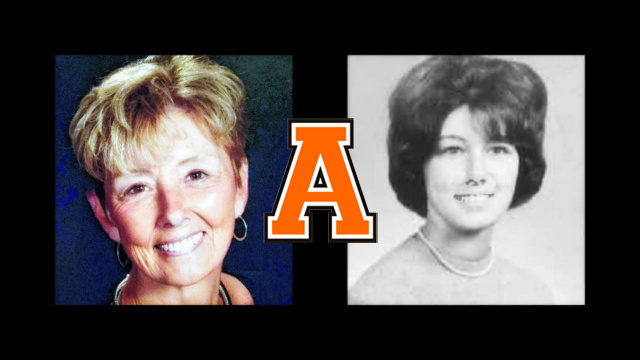
RUSSELL Carolyn J. (nee Braun) | Age 77 of Amherst, December 11, 2022 with her loving family by her side. She is survived by her spouse Rosemary Dayton, her children Cynthia (Jim) Rinehart, Keith (Kelli) Russell, Tina (Carlos) Padilla, Karen (Paul) Locander, Douglas (Dena) Russell, Scott (Kristie) Russell and David (Stephanie) Russell, 17 grandchildren and 2 great-grandchildren, daughter of the late Raymond and Katherine Braun and sister of Elaine Braun and Raymond (Linda) Braun. Also many nieces and nephews. Carolyn was a devoted wife and mother and was an accomplished Pianist. In her various roles at Amherst High School, she touched and influenced many young lives. There will be no prior visitation. A Memorial Service will be conducted on Monday December 19, 2022 at 11 AM in Calvary Episcopal Church, 20 Milton St. in Williamsville, NY 14221. Everyone welcome to attend. The service will be livestreamed at calvaryepiscopal.net. Memories and condolences may be shared at www.ROTHFUNERAL.com
Rochester – Born in October of 1951 in Buffalo NY, Bruce Edward Popper passed away peacefully while surrounded by family on Wednesday, November 23, 2022 after a long and hard fought battle with cancer. He was predeceased by his parents, Clifford and Ethel Popper. He is survived by his loving wife, Barbara Sullivan; their daughter, Dee Dee; his sister-in-law, Judy Gurski; his nieces, nephews, cousins, and many friends.
Bruce enjoyed the outdoors and was an avid hiker and backpacker. He carried a harmonica wherever he went and you could often find him jamming in the corner of a blues bar. A union organizer for workers to the end, Bruce spent 45 years fighting the Good Fight. A 1974 graduate of the University of Rochester, he was a member of the Employee Organizing Committee that began 1199 at UR. Bruce started his union career in 1978 as an organizer for 1199 SEIU and retired as a VP in 2019. Over his lifetime of service he served on multiple commissions and boards including Rochester and Monroe Country Racial and Structural Equity Commission, Rochester Health Commission, Rochester Monroe Anti-Poverty Initiative Steering Committee and the Board of Directors and Executive Committee of the Rochester Alliance of Communities Transforming Society (ROC/ACTS), and the Boards of the Health Careers Advancement Project (H-CAP), Healthcare Division Board Service Employees International Union (SEIU), New York Civil Liberties Union (NYCLU), Rochester and Genesee Valley Workforce Development Center, Finger Lakes Occupational Health Services, and served as the executive vice president of the Rochester and Vicinity Labor Council (AFL-CIO). He was proud to live in the city that honored Frederick Douglass, his personal hero whom he often referenced in his speeches. Bruce has written and spoken extensively over the years regarding collective bargaining, organizing, advocacy, minority and poverty issues. One of his most cherished possessions is a photograph of his closest union brothers and sisters taken at Frederick Douglass’ grave in Mt. Hope Cemetery. They surprised him with the gift because he had dragged so many of them there for a history lesson over the years. Bruce combined an unparalleled level of duty and devotion with a friendly demeanor marked by empathy and respect for others. He demonstrated that workers are the lifeblood of a community and through them all things are possible.
Thank you to Dr. Mulford and her amazing team at The Wilmot Cancer Institute, and the staff of the Palliative Care Unit at Strong Memorial Hospital for their extraordinary care.
The family will have a “Celebration of Life” gathering for friends and family at a later date. Please check back for updates. In lieu of flowers, memorial donations can be made to the Bruce Popper Memorial Fund at the Rochester Area Community Foundation.
Please feel free to share a memory or leave a condolence.
A longtime area labor leader has died. Bruce Popper, who was a leader of what is now 1199SEIU United Healthcare Workers East, before he retired a few years ago, died on Wednesday at the age of 71 at Strong Memorial Hospital after a lengthy illness.
Popper’s history with 1199, which represents about 2,600 health care workers in the Rochester area, and approximately 15,000 employees spread across Upstate NY, dates back to the late 1970s when he was hired as an organizer.
After Popper retired as Vice President of 1199 SEIU United Healthcare Workers East, Tracey Harrison was named to that position.
Harrison said that Popper “was always focused on ensuring that workers’ rights were protected.” He said that Popper was an excellent negotiator during contract talks, but said he was always focused on his members.
“How to improve their lives. So whether it was proper health insurance, being able to retire with dignity and respect, pension plans, education opportunities, childcare funds, you name it. Anything that he felt or had seen just from over the years in his research that had an impact on workers, he tried to remove any type of barriers,” said Harrison.
Assemblymember Harry Bronson (D-138), knew Popper well, and talked about him being extremely intelligent, but also very direct when discussing workers’ rights.
Bronson remembered a discussion among local anti-poverty advocates, when Popper distilled the argument being made very concisely.
“So for Bruce, when we were discussing how to address poverty and end poverty for our families, he said, ‘This is simple folks. If you want to end poverty, you have to pay them more so that they can provide for their families.’”
Bronson also said that Popper, “strongly believed that the labor movement was about social justice and fairness.” He said that, “everything (Popper) did was about workers’ rights, but it was bigger than that, it was about social justice.”
Assemblymember Demond Meeks (D-137), who previously worked as an organizer at Local 1199, said that, “While my heart is heavy with the passing of my labor brother, mentor, and friend Bruce Popper, I am truly grateful for the many life lessons I gained from him.” He praised Popper for taking a stand on social justice issues.
Please consider a gift to the Amherst Central Alumni Foundation on Giving Tuesday!
The Amherst Central Alumni Foundation, through generous donations from alumni, provides financial support to programs which enhance the student experience throughout Amherst Central School District. The foundation is an independent 501(c)(3), not-for-profit organization. Our donors help bridge the gap between basic funding and what Amherst students need to truly excel. Because of the Covid-19 pandemic, the foundation had to cancel its biggest annual fundraiser for two years running. Any amount helps.
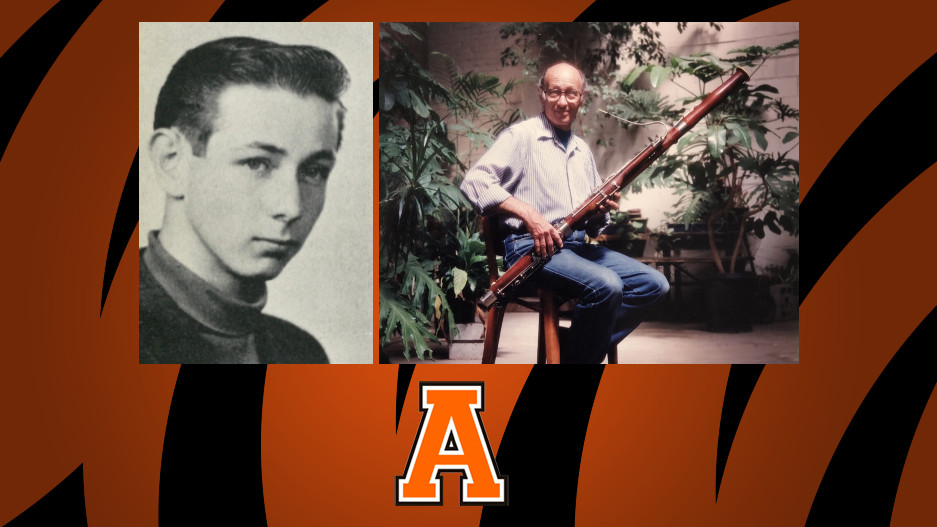
Robert Grove Hughes, was an American composer, conductor, bassoonist, publisher, and advocate for contemporary music. His compositions for western and eastern instruments, ballet and film were performed and recorded in the U.S. and abroad. He was 1977 composer-in-residence with San Francisco Symphony, and was commissioned by St. Paul Chamber Orchestra, San Francisco Ballet, and Oakland Symphony, among others. His film scores include Disney’s “Never Cry Wolf”. His last work Silenus’s Antiphonary is a hand-drawn synaesthetic compendium of music, poetry, and visual art.
Early studies with composer Lou Harrison led to their lifelong association. Hughes premiered, arranged, co-composed, conducted and recorded Harrison’s works from 1961. In 1963 they co-founded Cabrillo Music Festival (Aptos CA). Carlos Chavez, their third Music Director, commissioned Hughes to compose four orchestral works with electronics.
In 1964 Hughes founded Youth Chamber Orchestra (YCO) for Gerhard Samuel at Oakland Symphony. Under Hughes’ leadership, YCO performed, commissioned, toured, and recorded an impressive catalogue of contemporary music, surpassing the nation’s professional orchestras.
“The Black Composer in America,” 1970, toured the American South with a multicultural orchestra, the first project of its kind. YCO members included Lorraine Hunt (Lieberson), Jon Faddis, and Lynne Morrow.
Intent on exposing young musicians to world cultures and ethnic instruments, Hughes paired Carlos Chavez’s Xochipilli-Macuilxochitl, a reconstruction of Aztec Music, to classical Japanese, Chinese and Korean music transcribed for orchestra, and to Harrison’s Pacifika Rondo.
YCO recorded the Black Composer program, Pacifika Rondo, and two commissions – Henry Brant’s Kingdom Come, and Ned Rorem’s Water Music – on the commercial Desto label.
Under Hughes’ direction, YCO commissioned Robert Moran’s trailblazing Jewel-Encrusted Butterfly Wing Explosions for television ensemble, baroque consort, string orchestra, string quartet, variable tuners, horn quartet, environmental light projector, pre-recorded tape and film.
Returning as guest conductor in 1979, Hughes commissioned Laurie Anderson’s Born Never Asked, destined to become Anderson’s first hit, O Superman.
Hughes co-founded The Arch Ensemble with baritone Thomas Buckner to present contemporary music within an international and multimedia context. Ensemble members included Lorraine Hunt (Lieberson) and Don Buchla, pioneer of electronic musical instrument design.
Hughes composed principally for Prophet 10 synthesizer while co-Director with choreographer Margaret Fisher of MAFISHCO, an interdisciplinary performance and video group. From 1978 to 1989 they toured festivals as diverse as New Music America, New Dance USA, SF International Theater Festival, the Venice Biennale’s Carnevale, KALA’s Seeing Time, Sushi’s Performance Art Festival, and the Telluride Ideas Festival. They married in 1996.
A catalogue of “lost works found” includes music by Camille Saint-Saëns and Ezra Pound. Having presented and recorded world premieres of Pound’s music (Fantasy Records), Hughes established the publishing company Second Evening Art to distribute Pound’s complete musical oeuvre.
Hughes concluded his conducting career in 1990 with two Frank Zappa ballets for Kent Nagano’s Lyon Opera Ballet, with American choreographers Lucinda Childs and Ralph Lemon.
He died August 11, age 88, from congestive heart failure. He is survived by his wife, a son Stephen Ezra Hughes, brother Donald Hughes and sister Karen Saona.
Composer, conductor, impresario, bassoonist — Robert Hughes did it all
(By Joshua Kosman | San Francisco Chronicle | October 28, 2022) He co-founded the Cabrillo Festival of Contemporary Music, which is still going strong nearly 60 years later, and the Oakland Symphony’s Youth Chamber Orchestra, which is not. He collaborated with Frank Zappa, Laurie Anderson and Ezra Pound. He made contributions to the soundtracks of such Hollywood movies as “One Flew Over the Cuckoo’s Nest” and composed for the San Francisco Ballet.
Poke around in the history of classical and new music in the Bay Area for any length of time, and sooner or later you run across Robert Hughes — often in the most unexpected contexts.
Hughes, who died at 88 at his home in Emeryville on Aug. 11, was a bit of a musical Zelig. He wasn’t always a headline figure, but throughout the 1960s and ’70s especially he played a key role in a vast range of ambitious and influential musical projects.
It helped, of course, that Hughes was such a versatile and imaginative creative artist. He was a virtuoso of both the bassoon and its lower-pitched sibling, the contrabassoon. He was a fluent composer in an array of different styles, from the overtly avant-garde to the more directly accessible. He was a resourceful conductor.
Most notably, perhaps, Hughes was a visionary who kept coming up with ideas to make musical life in the Bay Area more exciting, more surprising and more responsive to the creative demands of the world around.
There is probably no better example of this than the Cabrillo Festival, which he conceived along with the composer Lou Harrison. Today, the Santa Cruz festival is an established landmark of new music, presenting two weeks’ worth of orchestral concerts every summer that draw in aficionados from the Bay Area and far beyond.
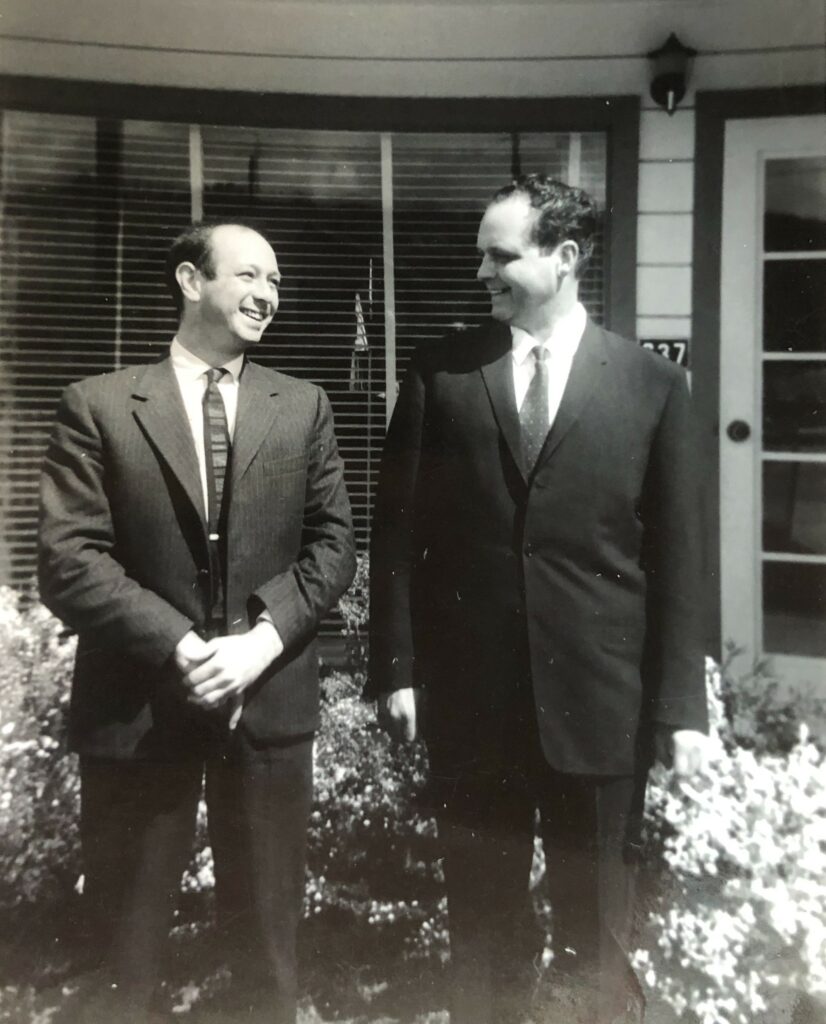
Robert Hughes (left) with composer Lou Harrison in 1961. Photo: Provided by Margaret Fisher
But in 1963, when the festival began, it was a loose, shambling affair that championed the creators’ own eclectic interests — chamber music, works of Stravinsky, brand new pieces of chance music and performance art. The rough edges got sanded down over the years, yet the original innovative spirit, born in an Aptos (Santa Cruz County) coffee shop called the Sticky Wicket, remained intact.
Not only was the Cabrillo Festival a vehicle for musical experimentation, but it also introduced Hughes to the choreographer Margaret Fisher, who had been brought in to dance in the 1974 premiere of a new opera by composer Beth Anderson on the subject of Joan of Arc. Hughes was the conductor, and their partnership led to a decades-long artistic collaboration, and to their marriage in 1996. (She survives him, along with his son Stephen from his first marriage, and two siblings.)
Other projects, though less long-lasting, proved to be equally daring.
Robert Hughes (right) with composer Ned Rorem before the 1967 premiere of Rorem’s “Water Music.” Photo: Provided by Margaret Fisher
In 1964, Gerhard Samuel was the music director of both the Oakland Symphony and the Cabrillo Festival when Hughes approached him with the idea of creating a youth orchestra devoted to new and unusual music.
The Youth Chamber Orchestra, which eventually mutated into the Oakland Symphony Youth Orchestra, was a model of inventive concert programming — all the more striking for being pitched to teenage musicians. Under Hughes’ guidance, his young charges performed music by the 20th century Mexican composers Carlos Chávez and Silvestre Revueltas, as well as new works by such American figures as Ned Rorem, Henry Brant, Harrison and others — including a very young Laurie Anderson.
In 1970, Hughes took the orchestra on a tour through Texas and Louisiana with a program titled “The Black Composer in America.” With the then-21-year-old mezzo-soprano Cynthia Bedford as soloist, the orchestra performed music by living African American composers, including George Walker (who decades later would win the Pulitzer Prize for Music), Margaret Bonds and Ulysses Kay.
The goal, organizers told the Oakland Tribune at the time, was twofold: to expose the young musicians to the racial realities of the American South, and to champion the work of an overlooked group of important composers.
Multidimensional musician Robert Hughes in 2015. Photo: Frank Wing
Overlooked music was a recurrent theme throughout Hughes’ career. “Hail, California,” a piece composed by the 80-year-old French composer Camille Saint-Saëns for the 1915 Panama-Pacific International Exposition in San Francisco, was considered lost until Hughes turned it up in a storage warehouse of the Library of Congress. He revived some little-known musical sketches by the author Robert Louis Stevenson, too.
His most noteworthy coup, though, was the resuscitation of “The Testament of François Villon,” an opera composed in 1923 by the poet Ezra Pound. A Berkeley performance in 1971 by the San Francisco Opera’s Western Opera Theater, which Hughes conducted, marked the piece’s latter-day premiere.
“Brilliant but irredeemably amateurish,” harrumphed Robert Commanday, The Chronicle’s music critic at the time.
Throughout his career, Hughes juggled an astonishing number of musical specialties. At the invitation of Kent Nagano, the longtime music director of the Berkeley Symphony, he conducted two of Zappa’s quirky, angular orchestral scores for the Lyon Opera Ballet in France. He composed and conducted soundtracks for feature films. He co-founded and led the Arch Ensemble for Experimental Music, based at 1750 Arch St., the longtime center for contemporary music in Berkeley. He worked regularly as a bassoonist for local orchestras.
Robert Hughes’ composing desk in 2012. Photo: Alex Walsh / Alex Walsh 2012
And all the while, he sustained his own efforts as a composer, writing music that was inventive, witty, ambitious and intimate. In his final years, Hughes was hard at work on “Silenus’ Antiphonary,” a hugely ambitious four-part work, based on the seasons, combining instruments, electronics, recorded texts and visuals.
Other figures may have found their way more directly into the spotlight. Harrison, in particular — Hughes’ friend and mentor, who first brought him to the Bay Area in 1960 — was always more of a marquee name (to the extent that contemporary music has any marquee names at all).
Yet Hughes stands as a shining example of a life well lived in the service of music. For all his modesty, his influence and his legacy are all around us.











 Tiger Tracks